







Sound Bath: sixty minutes for the nervous system
A Sound Bath is sixty minutes lying down while singing bowls and gongs fill the room. No water, no movement, nothing to achieve. At Anida Lab in Zürich it is the quietest hour in the schedule, and the one people ask most questions about.
What is a Sound Bath?
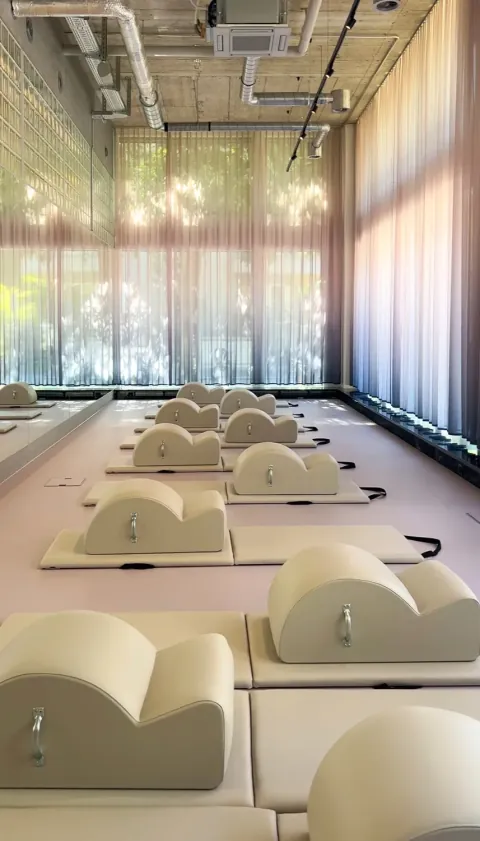
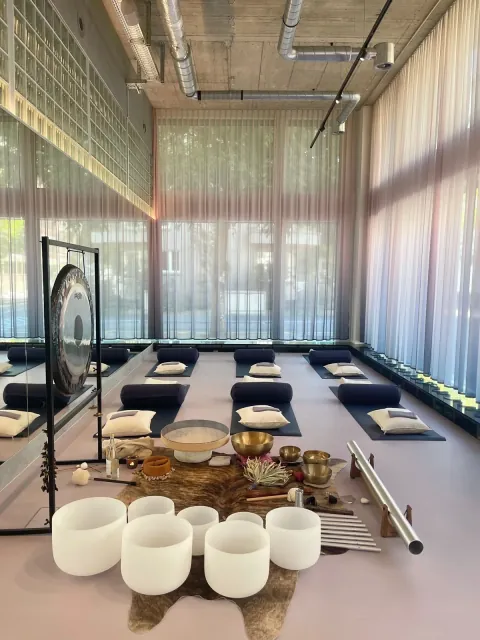
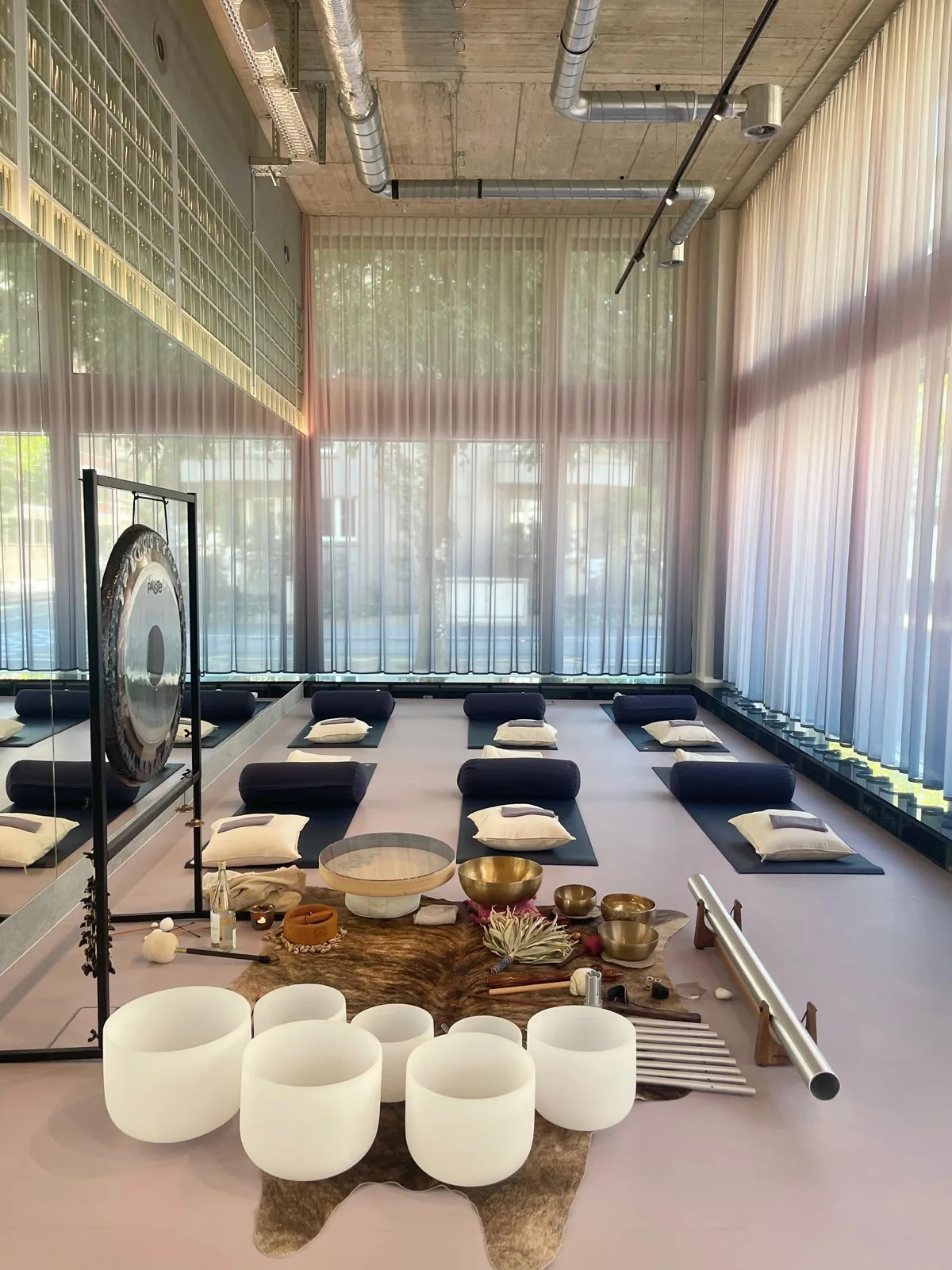
A Sound Bath is a listening practice. You lie on a mat in the Aura Room, twelve people at most, with a blanket and a cushion under the knees. The teacher plays singing bowls, gongs and other instruments with long, overlapping tones. The sound moves through the room in waves; your task is to lie still and breathe.
The word bath describes the feeling, not the setting. Nothing touches you except the air. Most classes at Anida Lab last fifty minutes; the Sound Bath lasts sixty, because the nervous system needs time to slow down and time to come back.
What happens in the sixty minutes
The first minutes are for arriving. You settle on the mat, close your eyes and follow a few rounds of guided breathing with a long exhale. Then the bowls begin, usually one at a time, close to the floor. The tones build, overlap and fade. The gong comes later: fuller, lower, felt in the chest as much as heard.
Somewhere in the middle most people stop following the sounds. Thoughts come and go, time stretches, some drift into sleep. The last ten minutes are quieter: single bowls, longer silences, then nothing. The teacher brings the room back slowly, with breath and small movements, before anyone sits up.
What sound does to the body
The honest answer is that the research is young. Small studies of singing bowl meditation report less tension, lower perceived stress and a better mood after a single session, with the clearest change in people who arrived most stressed. Measurements in these studies point to a relaxation response: slower breathing, a calmer heart rhythm, more variability between beats.
What drives it is probably less mysterious than the word frequency suggests. Lying still, breathing slowly and giving attention to one sensation for an hour is a reliable way to shift the nervous system from alert to rest. The sound makes this easy for people who find a silent meditation hard. We do not claim more than that.
Who a Sound Bath is for
People who cannot sit still for a meditation, people with full weeks and light sleep, people after a hard training week who want to recover without moving. Also anyone who has never meditated and wants a way in that does not require technique.
- Pregnancy: welcome. Lie on your side with a cushion if lying on the back is uncomfortable.
- Tinnitus, a hearing condition, epilepsy or a pacemaker: speak to your doctor first, and tell us before the class. The gong is loud at moments.
- After surgery or with acute pain: ask, and we will find the position that works.
How to prepare
Come warm. The body cools down quickly when it lies still, so bring a layer more than you think and socks. Eat lightly in the hours before; a full stomach and a long lie-down do not go well together. Make the last espresso at the Anida Café an early one; a matcha in the afternoon is the gentler option.
Arrive ten minutes early so the first tone does not find you rushing. Phone off, not silent, and the watch alarms with it. If you wear contact lenses, bring the case; many people prefer to take them out.
Why the evening
A Sound Bath can be done at any hour, but the schedule places it in the late afternoon and evening for a reason. The practice lowers alertness; the body is ready for the night afterwards, not for a meeting. People who sleep badly report the clearest difference when the session is in the last hours before bed and the evening afterwards stays quiet.
Enge is a good place for that. The lab is a few minutes from Bahnhof Enge; the tram home to the city center, Wollishofen or Wiedikon takes minutes, and the walk along the Zürichsee is an option in the warmer months.
Light and sound in one evening
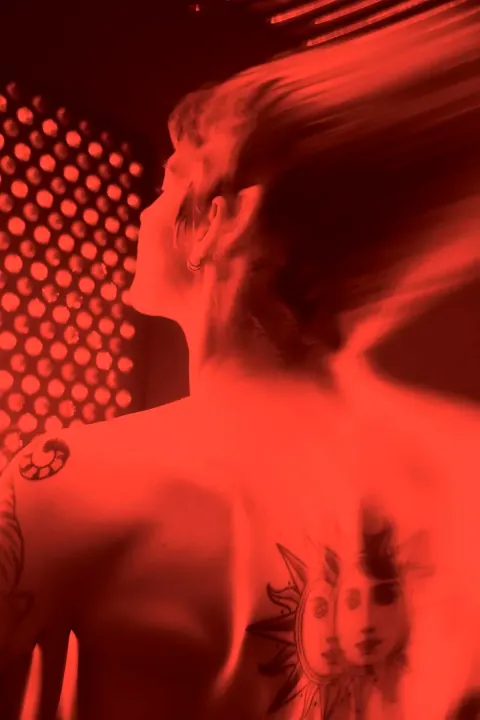
Red Light Therapy has a programme for the same purpose: Relaxation & Sleep, ten minutes in the cabin, one person, red and near-infrared light. Ten minutes before the Sound Bath warm the body and quiet the mind; ten minutes after extend the state. Both are a few steps from the Aura Room.
Breathwork is the related practice in the schedule for people who want to work actively with the exhale. The Sound Bath is the passive version: the room does the work, and you let it.
Questions and answers
No. Lying down and breathing is the whole task. The sound gives the attention a place to rest, which is what makes it easier than a silent meditation.
Yes, and it is fine. The nervous system goes where it needs to. The teacher brings the room back slowly at the end, so nobody wakes abruptly.
Yes. Lie on your side with a cushion if lying on the back is uncomfortable, and tell your teacher before the class.
Book a Sound Bath
The schedule shows the next dates in the Aura Room. Add Relaxation & Sleep in the cabin before or after.
In this article
All classes
More from the Journal
All articles
Run. Press. Recover. A Saturday with SANE Club
Thirty runners, 8 km from the lab and back, a heat press in the Anida Café and three rooms to recover in. How the morning with SANE Club went, and what we take from it.
Read
Pilates in pregnancy and after birth: what changes in class
What changes in each trimester, what the Reformer offers, when to return after birth and how to tell your teacher. A practical guide from Zürich.
Read
A morning in Enge: class, light and coffee before 09:00
The 06:30 class, ten minutes of light, an espresso at the counter and the tram to Paradeplatz. A morning in Enge, minute by minute.
Read