








Pilates in pregnancy and after birth: what changes in class
Pilates is one of the few practices that stays with you through pregnancy and back. At Anida Lab in Zürich every exercise has a version for the body you bring today. This is what changes, trimester by trimester, and how the return after birth works.
Can you do Pilates while pregnant?
Yes, in most pregnancies without complications, and with the agreement of your doctor or midwife. Pilates works on breath, the deep muscles of the trunk, the pelvic floor and the back: the parts of the body that carry the most during these months. The class itself does not change. The exercises do.
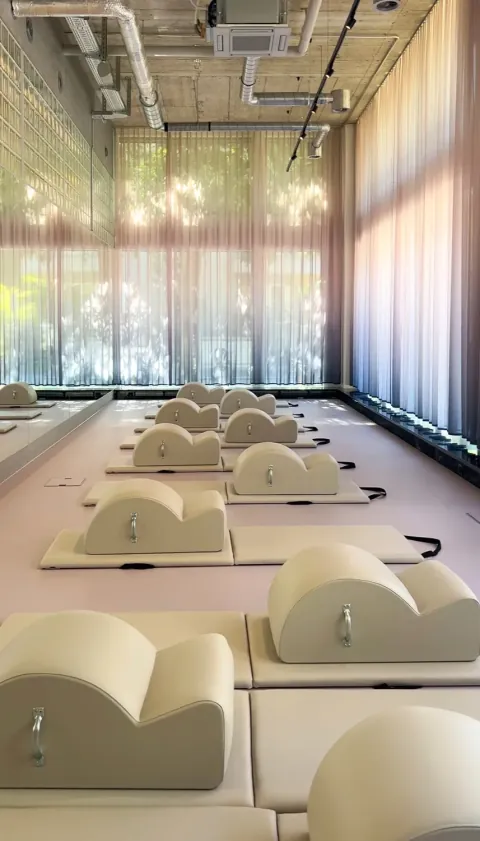
What matters is that we know. The online health questionnaire asks about pregnancy before your first booking, and your teacher hears it again before every class. Small groups make this simple: five people in the Reformer Room, fourteen in the Aura Room, and a teacher who sees every repetition.
First trimester: almost everything, with attention
In the first twelve weeks the body looks the same and feels different. Tiredness and nausea decide the intensity on a given day, not the plan. Nothing new is added in this phase: no exercise you have never done, no heavier springs, no longer holds.
The focus shifts early to the things that pay off later: breathing into the sides of the ribcage, finding and releasing the pelvic floor, keeping the back long. If you do not want to tell the group yet, tell your teacher quietly before the class.
Second trimester: off the back, less flexion
From around week sixteen two things change. Long periods lying flat on the back are avoided, because the weight of the uterus can press on the large vein that returns blood to the heart; dizziness is the signal. And strong flexion of the trunk, the classic roll-up and anything that resembles a sit-up, leaves the class, because it loads the midline of the abdomen while it stretches.
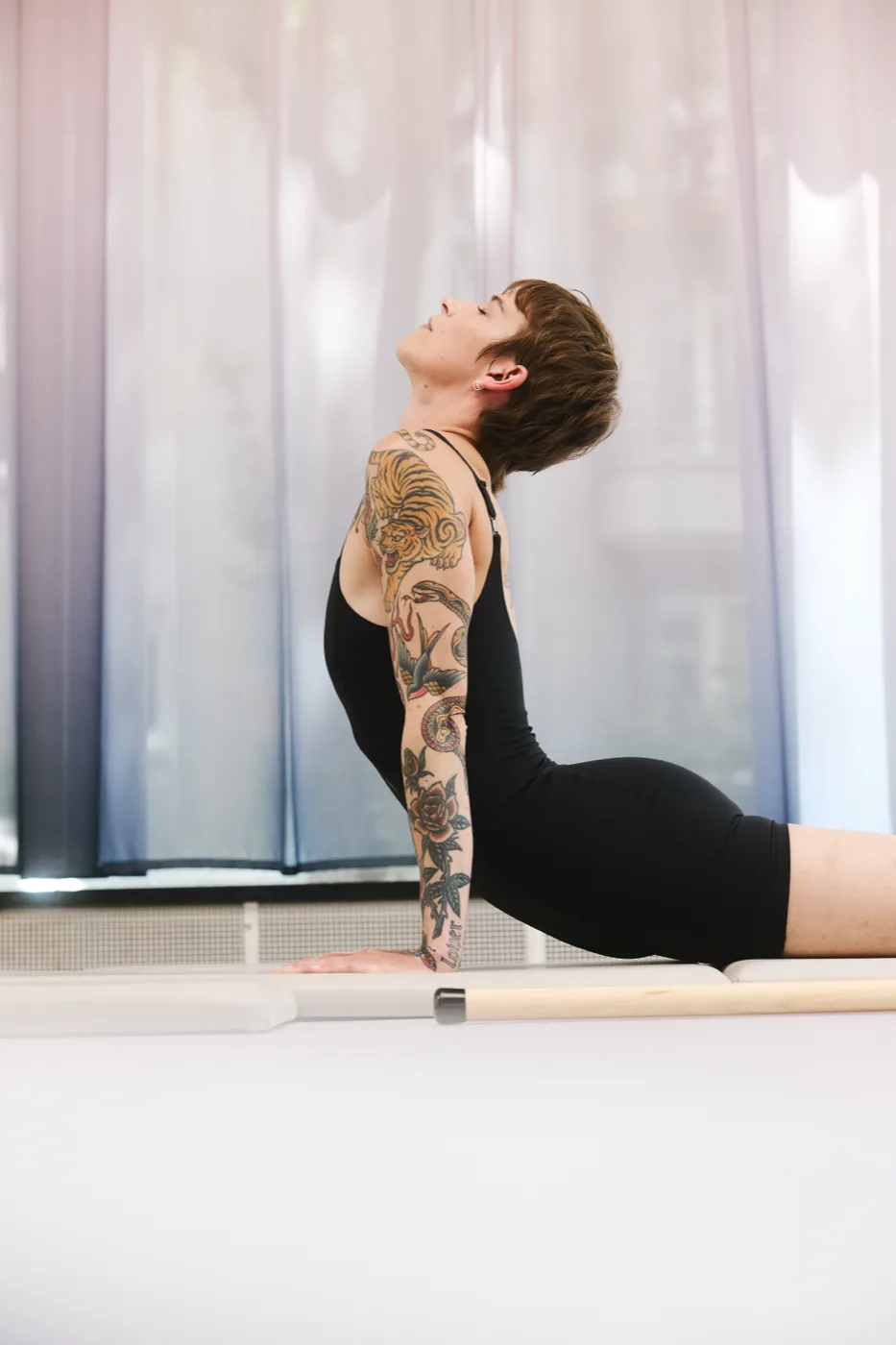
What stays is a lot: side-lying series for hips and glutes, work on all fours for the back, standing balance, arm and leg work against light springs. The center of gravity moves forward week by week, so balance exercises get a hand on the wall or on the frame of the Reformer.
Third trimester: space, breath and the back
In the last weeks the ribcage has less room and the pelvis more. Classes use shorter levers and a wider stance, more time seated and on all fours, and breathing that practises the long exhale. The pelvic floor is trained in both directions now: to hold and to let go. Both are needed at birth.
The back often asks for most attention. Gentle extension over a support, rotation in sitting and long holds on the forearms relieve the lower back and the space between the shoulder blades. If something pulls or tingles, the exercise changes on the spot.
What changes on the Reformer
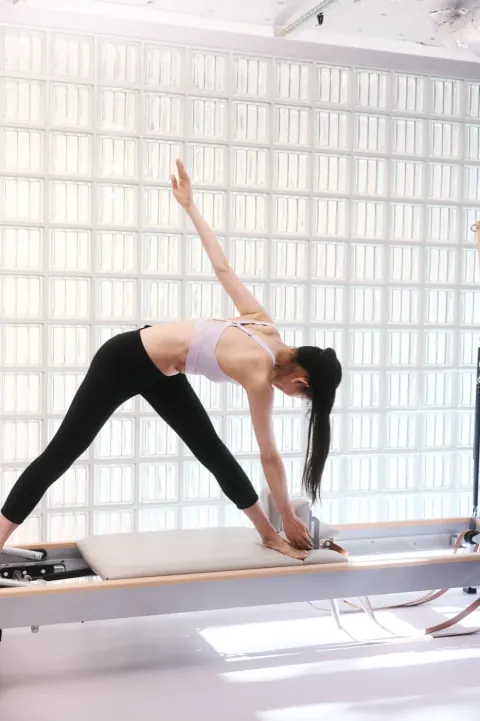
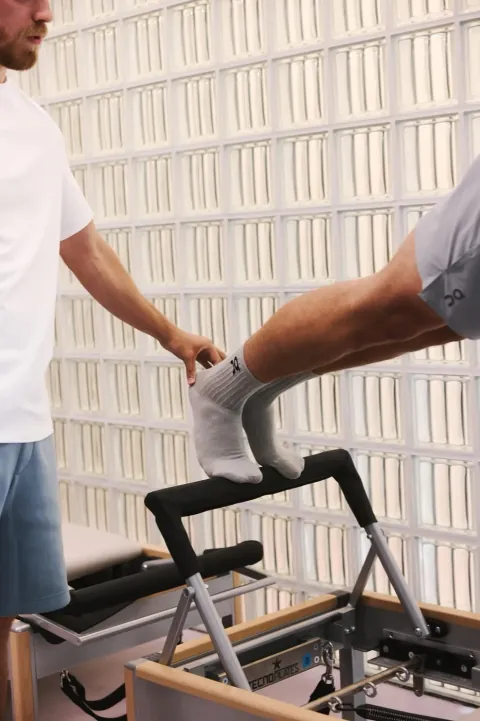
The Reformer is well suited to pregnancy because the springs can give support instead of resistance. Footwork moves from lying to sitting or to a raised position. The straps allow arm and leg series in a seated or side-lying position, and the box turns the carriage into a stable bench for hip and back work.
Springs are set lighter than usual and the range of movement smaller. Five people share the room, so the teacher adjusts your machine before each exercise. On the mat the class moves to the same positions: side, all fours, sitting and standing, with a cushion or a block wherever the body asks for it.
After birth: when to return and how
The return starts at the postnatal check. Your doctor or midwife gives the go-ahead, in many cases from six to eight weeks after a vaginal birth and later after a caesarean. The first weeks in class are quiet: breath, pelvic floor, the deep abdominal layer, posture while carrying and feeding.
A gap in the midline of the abdomen, diastasis recti, is common and is checked before loaded exercises return. Flexion against resistance waits until the midline holds. Progress comes in months, not weeks. Many people start again on the mat and move to the Reformer; others go straight to the Reformer with light springs.
- Bring water, and a supportive top if you are breastfeeding.
- Feed or express before the class if you can; the body is more comfortable.
- Tell your teacher about the birth and how recovery is going. Every return is different.
When to stop, and who to ask
Some signals end the exercise or the class, in pregnancy and after birth: pain, bleeding, dizziness, shortness of breath that does not settle, contractions, leaking from the pelvic floor, or a bulge along the midline when you tense. Stop, tell your teacher, and speak to your doctor or midwife before the next class.
Everything else is a conversation: the health questionnaire online, a word before the class, a message after it. Pilates during these months is not a lighter version of the method. It is the method applied to a body that is changing fast.
Questions and answers
No note is required, but the agreement of your doctor or midwife is. State the pregnancy in the health questionnaire and tell your teacher before each class.
Both are adapted. The Reformer gives support through the springs and a group of five; the mat offers a larger class of fourteen and more freedom in positions. Choose the format you already know, or try both.
Later than after a vaginal birth, and only with medical clearance at the postnatal check. The first classes work on breath and the pelvic floor; loaded abdominal work follows months later.
Tell us, then book
Fill in the health questionnaire when you book, and tell your teacher before the class. The first class is on the mat or on the Reformer, as you prefer.
In this article
All classes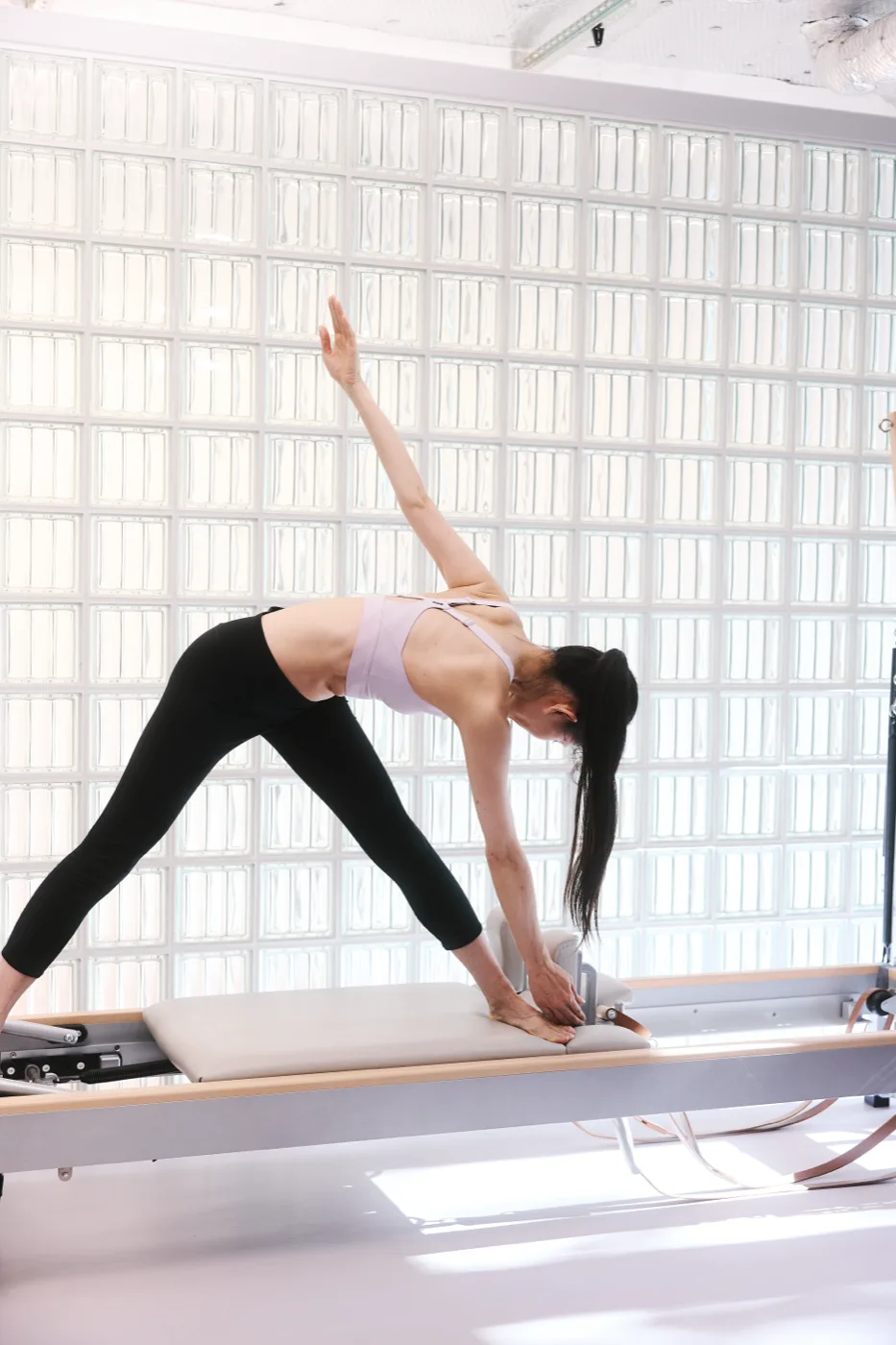
More from the Journal
All articles
Run. Press. Recover. A Saturday with SANE Club
Thirty runners, 8 km from the lab and back, a heat press in the Anida Café and three rooms to recover in. How the morning with SANE Club went, and what we take from it.
Read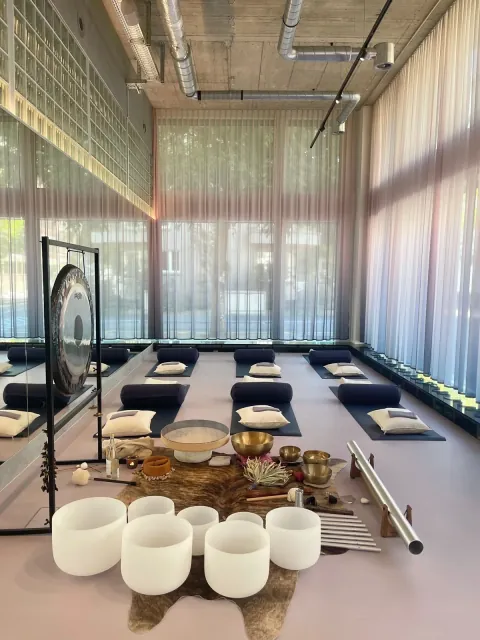
Sound Bath: sixty minutes for the nervous system
Bowls, gongs and a long exhale: what sixty minutes lying down in the Aura Room do, what the research says so far, and how to prepare.
Read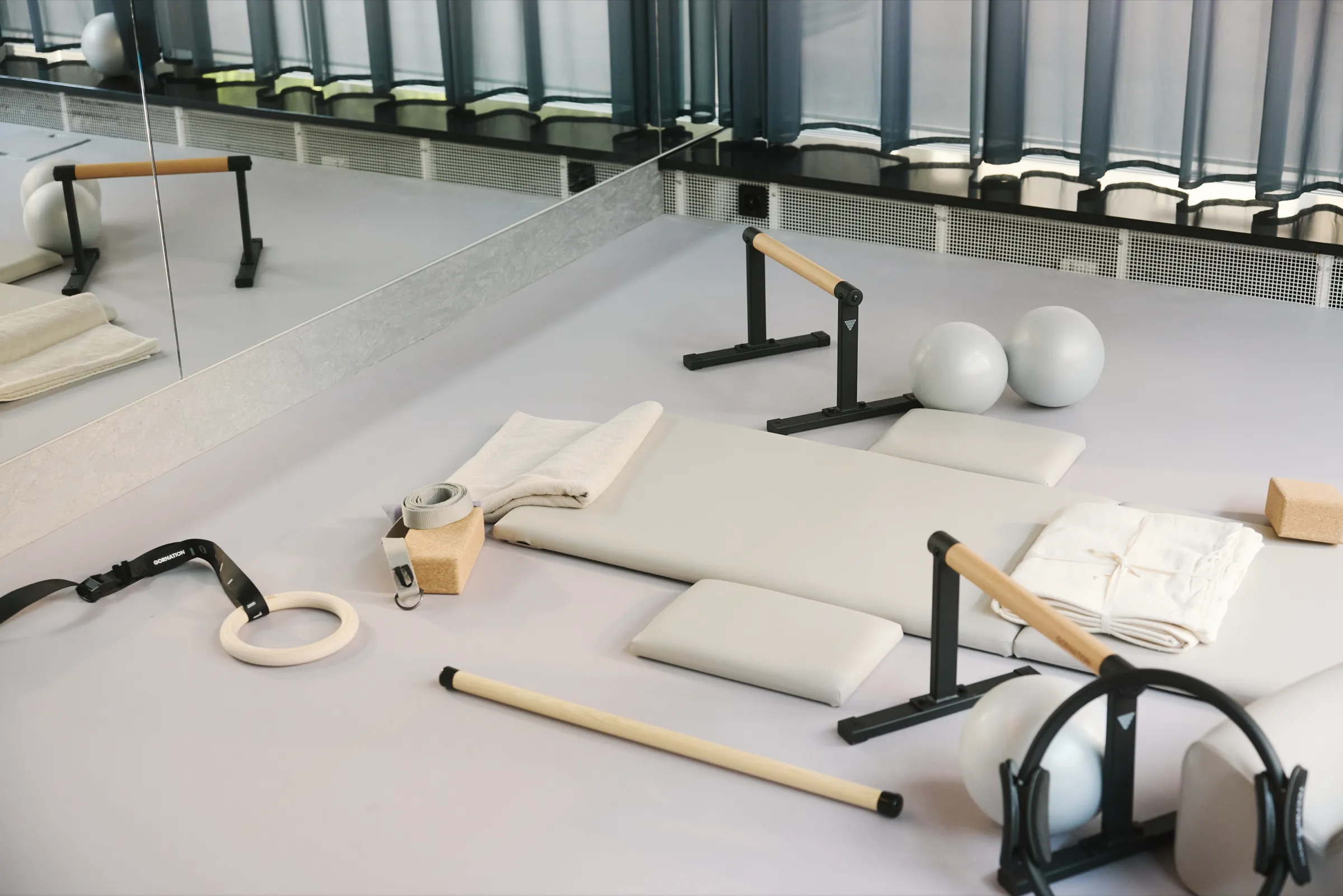
A morning in Enge: class, light and coffee before 09:00
The 06:30 class, ten minutes of light, an espresso at the counter and the tram to Paradeplatz. A morning in Enge, minute by minute.
Read