









Breathing through the nose: what changes and how to practise it
Most adults breathe more than they need, often through the mouth. Breathing through the nose slows the breath, improves how oxygen reaches the tissue and gives the nervous system a brake. At Anida Lab in Zürich, two classes work with exactly that: Breathwork and Oxygen Advantage.
Why does the nose matter?
The nose is not a smaller version of the mouth. It filters, warms and humidifies the air before it reaches the lungs. The narrower passage creates resistance, so the breath becomes slower and deeper, and the diaphragm does more of the work.
The sinuses also produce nitric oxide, a gas that widens blood vessels and airways. Breathing through the nose carries it down into the lungs with every breath. Mouth breathing bypasses all of this, which is why it often feels faster and shallower.
Carbon dioxide is not the enemy
Oxygen leaves the blood and enters the muscle only when enough carbon dioxide is present. This is the Bohr effect. When you overbreathe, you blow off too much CO₂, the blood vessels narrow and less oxygen reaches the tissue, even though the blood is full of it.
Tolerance to CO₂ is trainable. The feeling of air hunger during a breath hold is not a lack of oxygen but a rise in carbon dioxide. Learning to stay calm there changes how you breathe during a run, in a meeting and at night.
How breathing talks to the nervous system
A long, slow exhale through the nose lowers the heart rate within a few breaths. The signal travels through the vagus nerve and tells the body that it can shift from alert to rest. Short, high chest breaths do the opposite.
That is why breath is the fastest lever on stress that you carry with you. It works on the platform at Bahnhof Enge, at the desk and before sleep. The classes in the Lab make the lever precise instead of accidental.
Breathwork or Oxygen Advantage: which class?
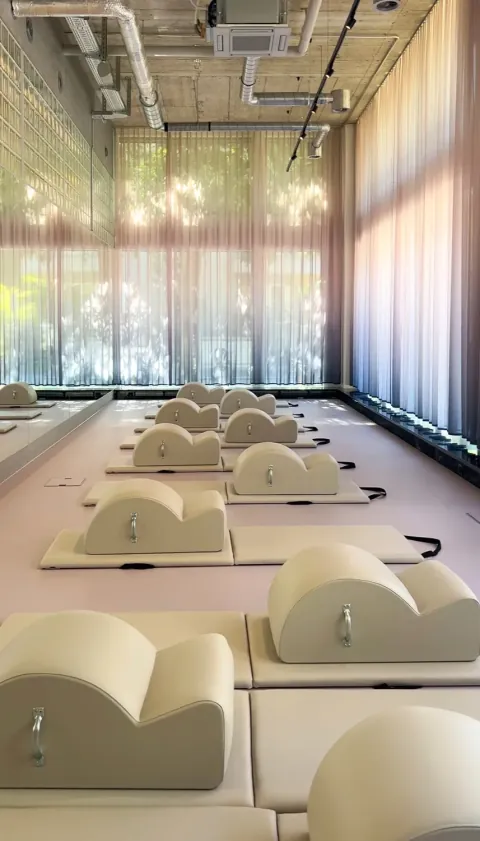
Breathwork at Anida Lab is a guided fifty-minute session in the Aura Room. Longer sequences, changing rhythms, phases of intensity and phases of complete stillness. The aim is to experience what the breath can do and to leave with a quieter system.
Oxygen Advantage® is a method developed by Patrick McKeown. It is measurable and practical: light breathing, breath holds, nasal breathing under load, a simple score to track progress. The class suits people who want to apply breathing to sport, sleep and focus.
- Breathwork: experience, depth, regulation
- Oxygen Advantage: technique, measurement, transfer to everyday life
- Both: fifty minutes, Aura Room, no experience needed
Five minutes a day
Sit upright, close the mouth, one hand on the lower ribs. Breathe in through the nose for about four seconds, out for about six. Let the belly and the ribs move, keep the shoulders still. Five minutes, once or twice a day.
Take the same rule for a walk. Along the Zürichsee or up towards the Üetliberg, keep the mouth closed and let the pace follow the breath, not the other way round. At first it feels slow. After a few weeks the same pace needs less air.
Breathing and sleep
Mouth breathing at night shows up as a dry mouth in the morning, snoring and restless sleep. Nasal breathing during the day trains the pattern for the night. People who practise it often report that they wake up less and feel more rested.
In the Lab, the Relaxation & Sleep programme of the Red Light Therapy is a quiet partner to this work. Twenty minutes of light in the evening, a few slow breaths through the nose, and the day has a clear end.
Who it is for, and where
People who sit for long hours and notice shallow breathing. Runners and cyclists who want more from the same effort. Anyone who finds it hard to switch off. The classes take place at Gotthardstrasse 40 in Zürich Enge, Kreis 2, a few minutes from Bahnhof Enge, with the Anida Café next door.
Questions and answers
Yes, up to a moderate intensity, and that range widens with practice. During sprints the mouth helps. Return to the nose as soon as the pace allows.
A blocked nose is frequently a result of mouth breathing, not only its cause. Gentle nasal breathing and short breath holds often clear it within days. If it persists, speak to a doctor.
No. Both classes start where you are. Tell the teacher about pregnancy, blood pressure or a heart condition before the class.
Breathe less, and better
Breathwork and Oxygen Advantage in the Aura Room, Zürich Enge. Book a class online.
In this article
All classes
More from the Journal
All articles
Run. Press. Recover. A Saturday with SANE Club
Thirty runners, 8 km from the lab and back, a heat press in the Anida Café and three rooms to recover in. How the morning with SANE Club went, and what we take from it.
Read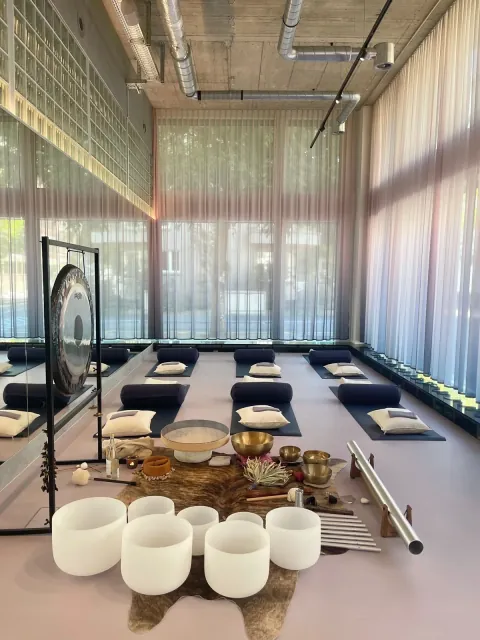
Sound Bath: sixty minutes for the nervous system
Bowls, gongs and a long exhale: what sixty minutes lying down in the Aura Room do, what the research says so far, and how to prepare.
Read
Pilates in pregnancy and after birth: what changes in class
What changes in each trimester, what the Reformer offers, when to return after birth and how to tell your teacher. A practical guide from Zürich.
Read