









Back pain from sitting: a weekly plan that fits a working life
Most back pain in people who work at a desk has no dramatic cause. The back is not broken. It is under-used in some places and over-used in others, for eight hours a day. A week with the right dose of movement changes that faster than most people expect.
Why sitting makes the back ache
Sitting is not dangerous. Sitting without variation is. The hips stay flexed, the hip flexors shorten, the glutes switch off, the thoracic spine rounds and the head moves forward. The lower back ends up stabilising a body that nothing else is holding. Add a screen, a commute on the S-Bahn in the same position, and the muscles that should support the spine have no reason to work all day.
Pain is the message that this arrangement is costing something. Discs, joints and muscles are usually fine. They are tired of the same angle.
What a back needs: three things
Every plan that works for back pain from sitting delivers the same three things, in whatever order.
- Extension and rotation: the movements sitting removes.
- Strength in the deep trunk: the muscles close to the spine, not the surface abdominals.
- Variation: more positions per day, not one better position.
The weekly plan
Two classes, one short daily routine, light when possible. That is the whole plan. It fits around a job in Enge, Wiedikon or the city center, and it fits around a family.
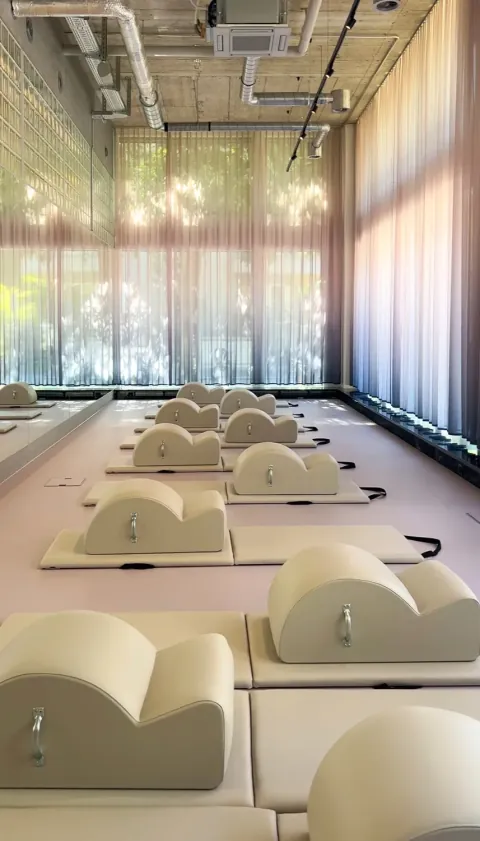
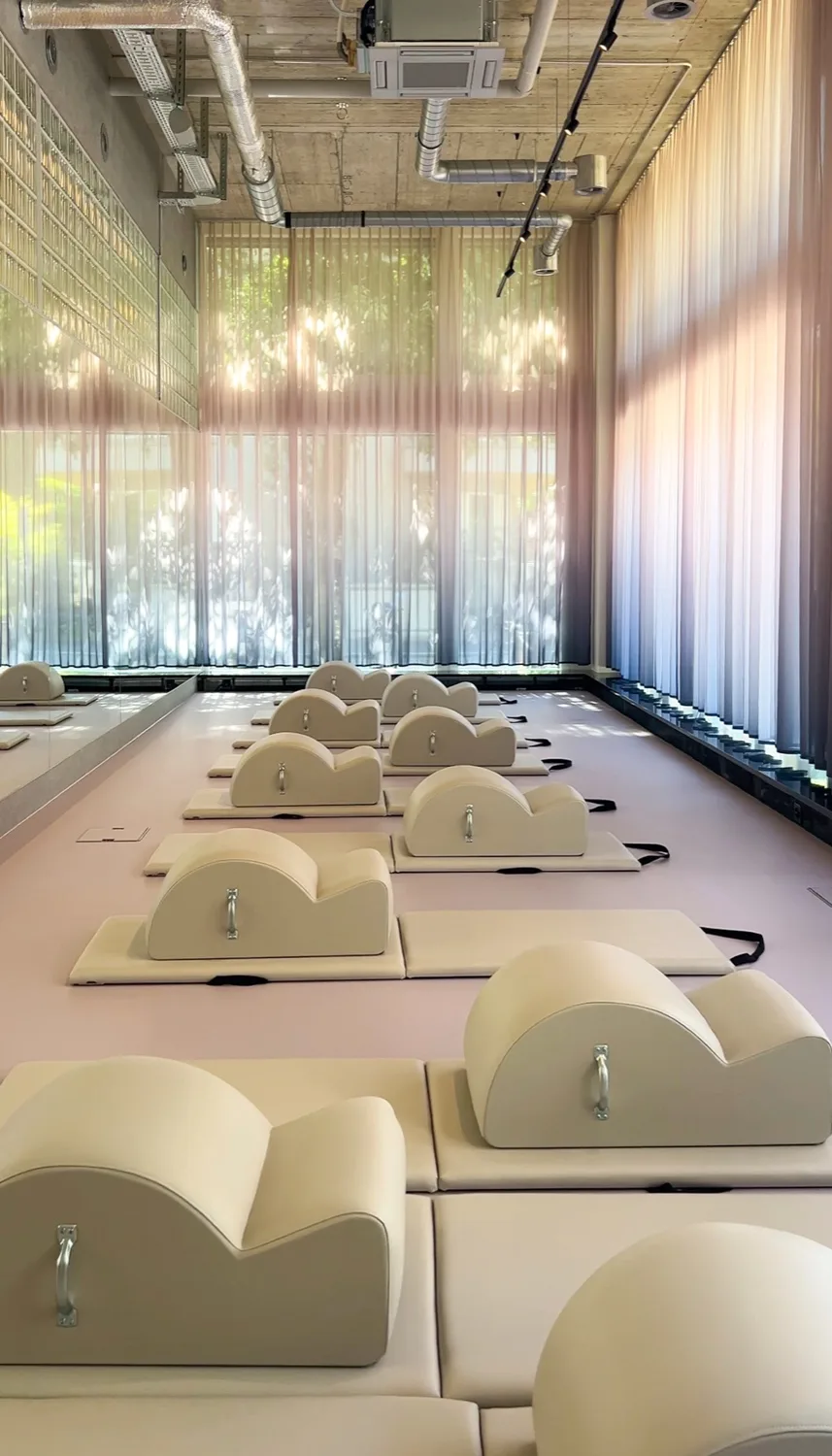
- Class one, Spine Corrector in the Aura Room: thirty minutes over the arc. The curve opens the chest and takes the spine into extension with support. Thirty minutes, so it fits a lunch break from an office near Bahnhof Enge.
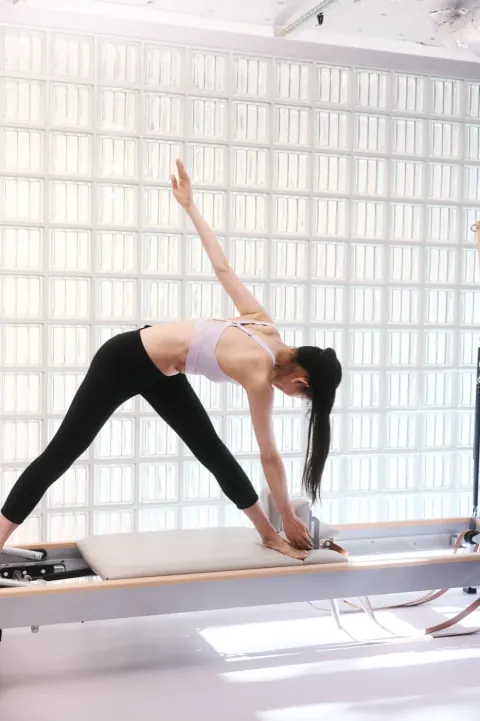
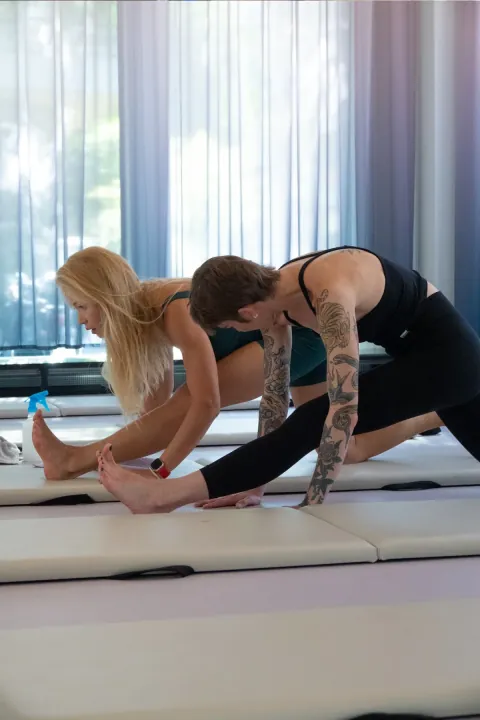
- Class two, Mat Pilates or Move & Stretch: fifty minutes. The mat builds the deep trunk; Move & Stretch restores range in the hips and the thoracic spine. Alternate week by week.
- Daily, five minutes at the desk: the routine below.
- Optional, Red Light Therapy: ten minutes of Recovery & Regeneration after a class, or in the evening for the lower back.
Five minutes at the desk
Nothing here needs equipment or a change of clothes. The point is variation, not effort.
- Stand up every forty-five minutes, even for one minute.
- Ten slow hip hinges with a long back, hands on the desk.
- Thoracic rotation: sitting, hands crossed on the chest, turn to each side ten times and breathe out as you turn.
- Hip flexor stretch standing, one foot on the chair behind you, thirty seconds each side.
- Take the stairs instead of the lift at Bahnhof Enge. The hip extension is the point.
What to expect, week by week
Week one: the classes feel unfamiliar and the back feels worked in a new way. Weeks two and three: sitting becomes noticeable, which is progress; you start to move before the pain arrives. Week four: most people report a lower back that is quieter at the end of the day and a chest that opens more easily.
From there the plan maintains itself with two classes a week. The five minutes at the desk stay. They are the part that protects the result between classes.
When to see a professional first
Movement is the right answer for most back pain, but not for all of it. See a doctor or physiotherapist before starting if the pain radiates into a leg below the knee, if there is numbness or weakness, if it followed an accident, if it wakes you at night, or if it comes with fever or weight loss.
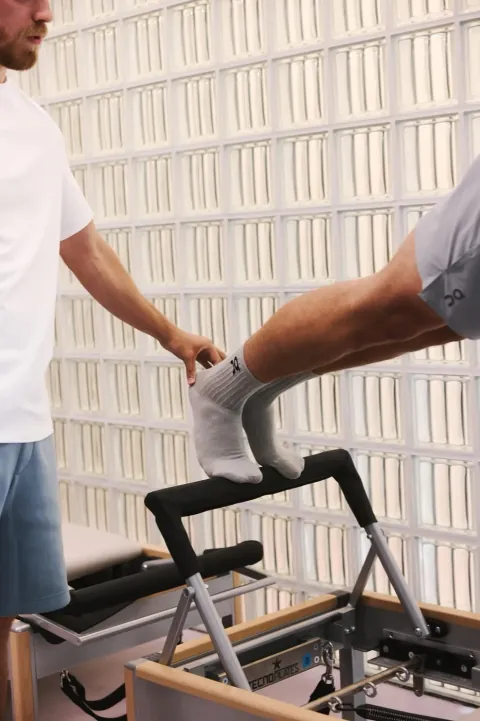
For everything else: tell your teacher before the class. The exercises adapt. The Spine Corrector and the Reformer can support the spine as much as they load it, and a group of five to fourteen people means the teacher sees your back, not a room.
Why at Anida Lab
Two rooms and the cabin under one roof at Gotthardstrasse 40, so a class and ten minutes of light fit in one visit. Open from 06:30 on weekdays, so the plan works before the office as well as after it. Booking online with your email address, cancellation up to 24 hours before, and the Anida Café for the coffee you would have had at the desk.
Questions and answers
For most back pain from sitting, yes. It strengthens the deep muscles that support the spine and restores extension and rotation. Acute or radiating pain needs a diagnosis first.
Many people notice a quieter lower back within three to four weeks. The daily five minutes at the desk speed this up.
Spine Corrector if extension is what you lack; Mat Pilates if you want the whole trunk. Tell the teacher about the pain before the class starts.
Start with the Spine Corrector
Thirty minutes at lunchtime, a few minutes from Bahnhof Enge. Book a time in the schedule and tell the teacher about your back.
In this article
All classes
More from the Journal
All articles
Run. Press. Recover. A Saturday with SANE Club
Thirty runners, 8 km from the lab and back, a heat press in the Anida Café and three rooms to recover in. How the morning with SANE Club went, and what we take from it.
Read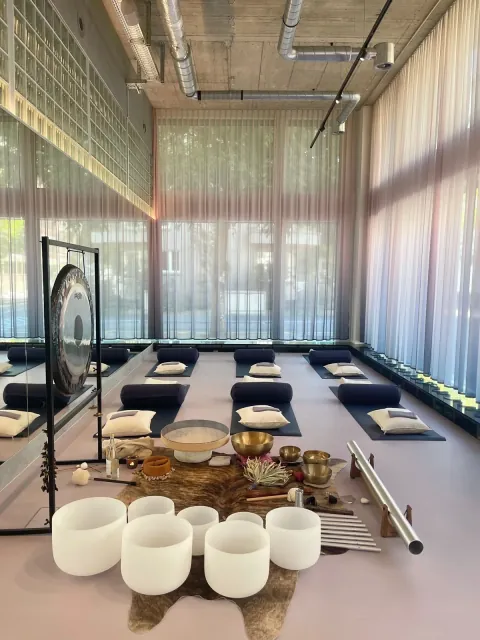
Sound Bath: sixty minutes for the nervous system
Bowls, gongs and a long exhale: what sixty minutes lying down in the Aura Room do, what the research says so far, and how to prepare.
Read
Pilates in pregnancy and after birth: what changes in class
What changes in each trimester, what the Reformer offers, when to return after birth and how to tell your teacher. A practical guide from Zürich.
Read